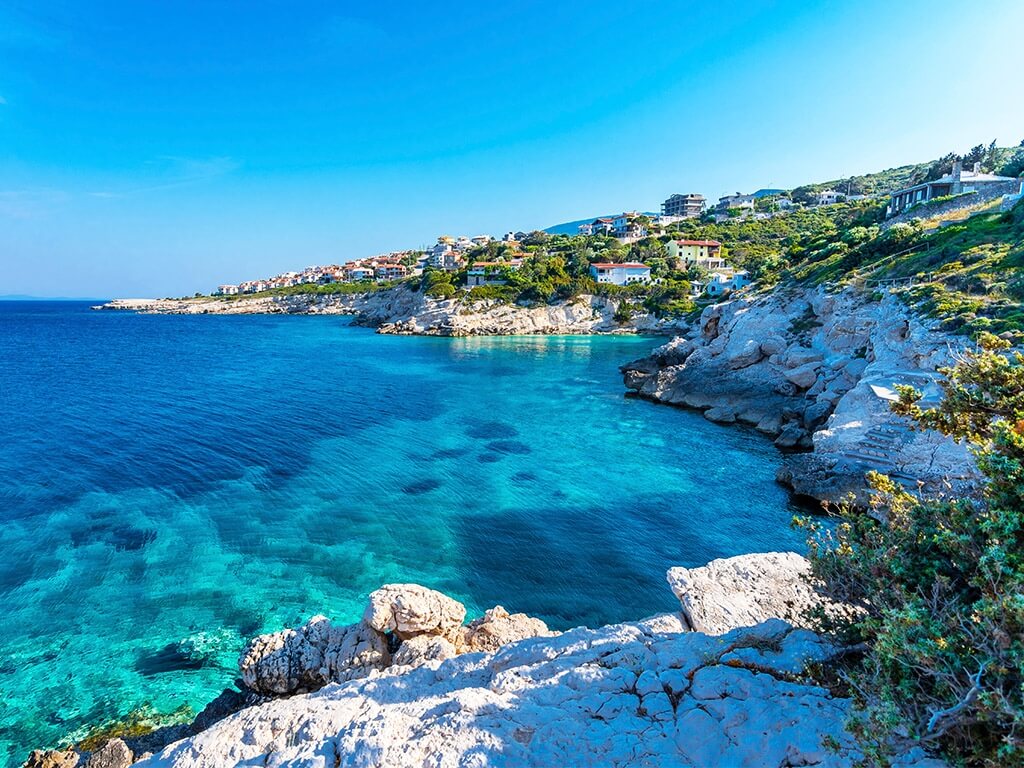
The road to Karaburun narrows as it climbs. The land becomes drier, the hillsides steeper, the villages smaller. By the time the peninsula reaches its northern tip, there is little left but rock, sea, and the occasional goat path descending toward a cove.
Karaburun is the outermost reach of the Western Aegean — a peninsula within a peninsula, separated from the rest of the coast by geography and temperament. There are no boutique hotels here. No restaurants with reservations. The towns that remain are working settlements: fishing harbours, small farms, families who have stayed.
The Geography
The peninsula extends north from the main coastal road, rising to a spine of dry hills before dropping sharply to the sea on both sides. The eastern shore faces the calm waters of the gulf; the western shore meets the open Aegean. The difference is legible — sheltered coves on one side, exposed rock and wind on the other.
The road follows the eastern coast for most of its length, passing through villages every few kilometres. Mordoğan. Kösedere. Hasseki. Each is modest: a harbour, a handful of houses, perhaps a café or a small grocery. The western shore is less accessible — reached by tracks that wind down from the ridge, leading to beaches where visitors are rare.
The Towns
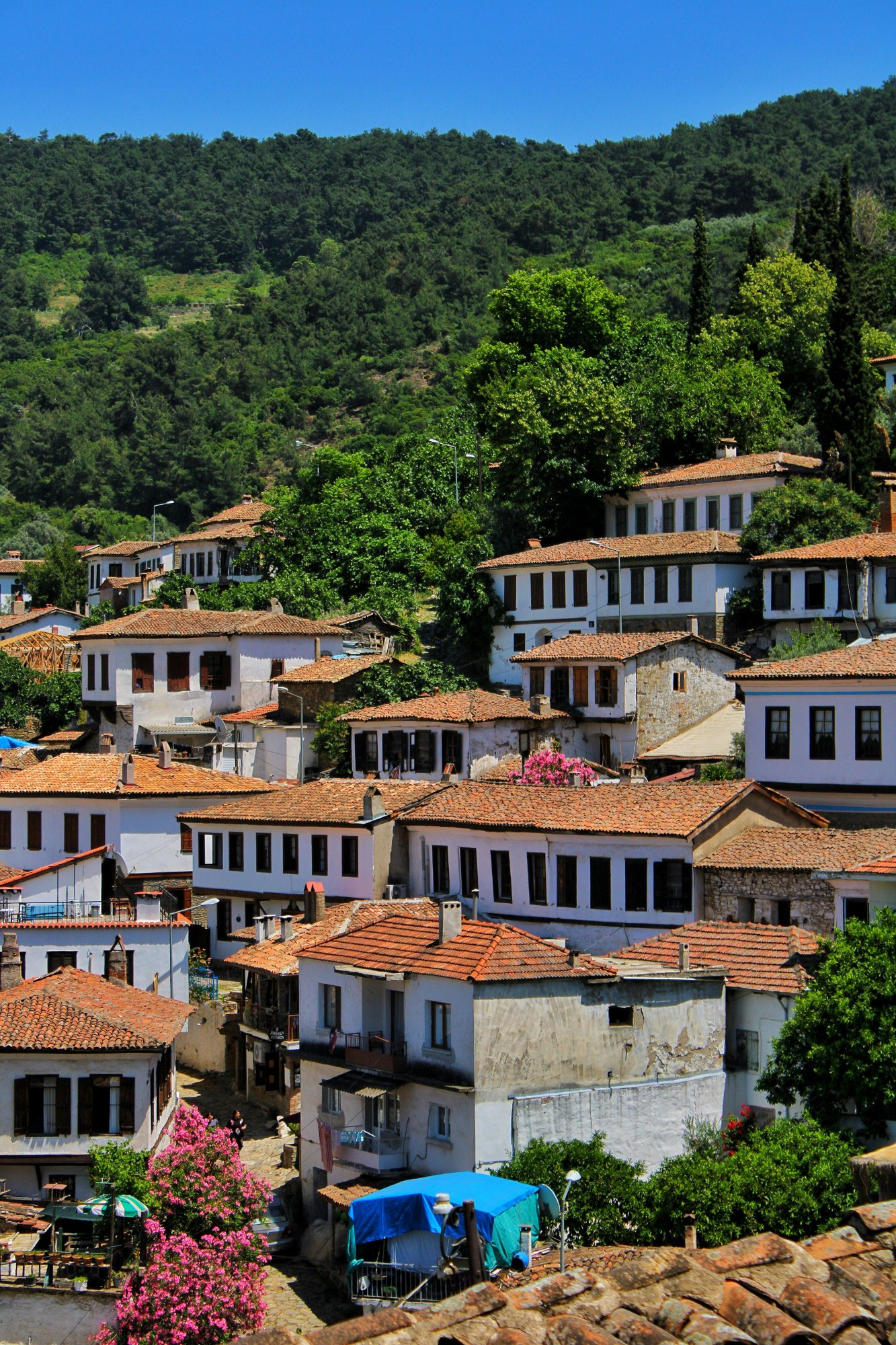
Karaburun itself, the peninsula's main settlement, sits at the base of a hillside overlooking a working harbour. The town has a quietness that distinguishes it from Çeşme or Alaçatı. There is no promenade, no curated streetscape. Fishermen repair nets on the quay. Cafés serve tea to regulars. The pace is local.
North of town, the road continues to smaller settlements. Some are nearly abandoned — stone houses emptied decades ago, now slowly returning to the landscape. Others maintain a fragile presence: a few families, a mosque, a single shop that opens irregular hours.
At the peninsula's tip, near the village of Sarpıncık, the land ends. The view extends across open water toward the Greek island of Chios. On clear days, the outline is sharp. On others, it dissolves into haze.
Dispatches from the peninsula
Notes on travel, food, and the Western Aegean. No agenda.
Thank you — first dispatch on its way.
What Karaburun Offers
This is not a destination for those seeking activity. There are no organised excursions, no lists of sights. The appeal is elemental: swimming from empty coves, driving roads with no traffic, eating at a harbourside restaurant where the menu is spoken rather than written.
The peninsula rewards those who adjust their expectations. A morning can be spent descending a rough track to a beach where no one else appears. An afternoon can pass at a café table, watching boats move in the harbour. An evening can end with grilled fish and a glass of local wine, the sun setting over the open Aegean.
Reaching Karaburun
The peninsula is roughly an hour's drive from Çeşme, though the road's curves extend the journey. There is no public transport of practical use. A car is necessary — and part of the experience. The drive itself, along the ridgeline with the sea visible on both sides, is among the most striking on the Western Aegean.
Accommodation is limited. A handful of small pensions and guesthouses operate in Karaburun town; elsewhere, options are few. This scarcity is part of what preserves the peninsula's character.
Karaburun does not try to attract. It simply remains.