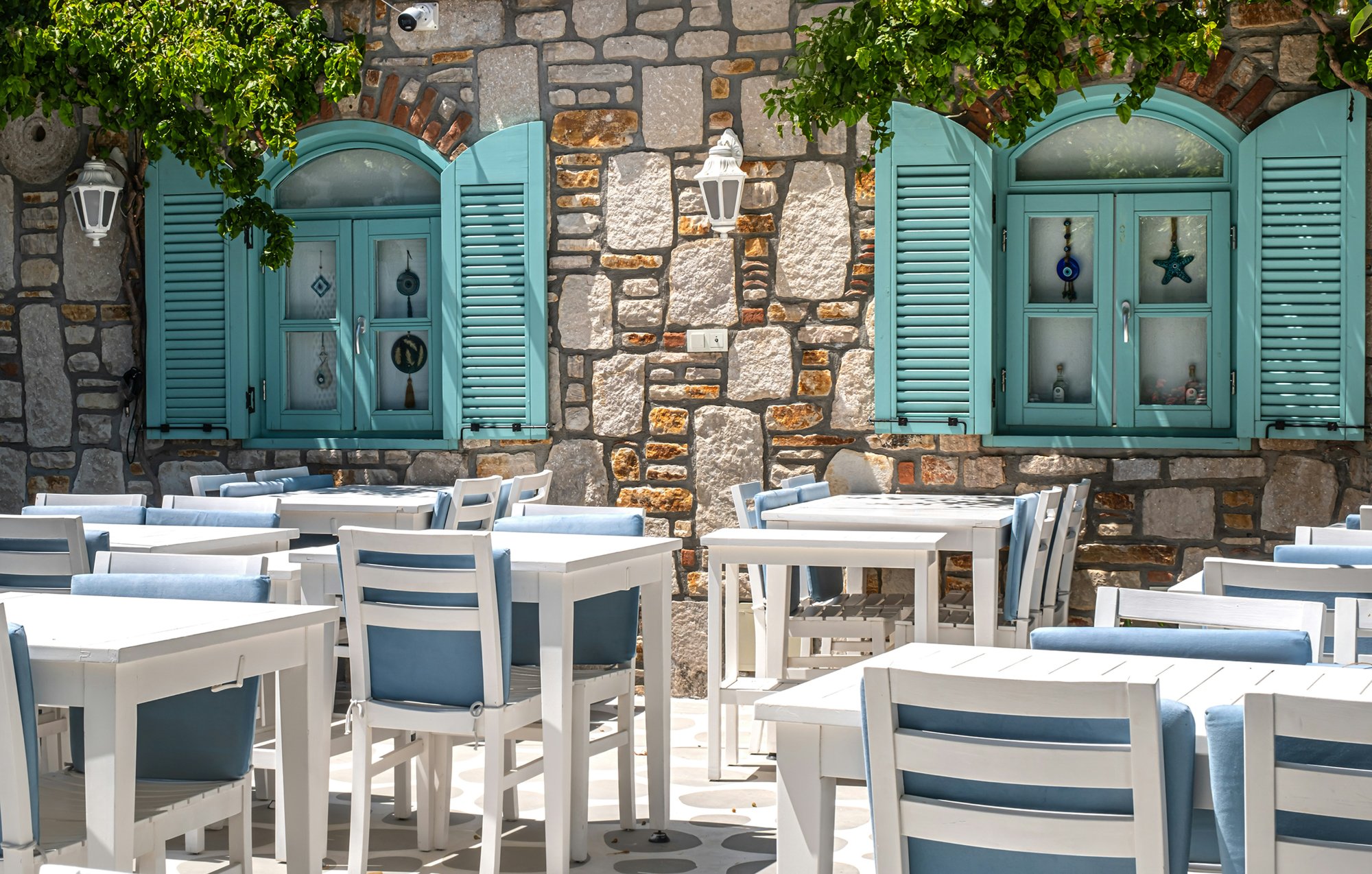
The market in Sığacık appears on Sunday mornings and disappears by noon. Stalls line the streets inside the old fortress walls, spilling out toward the harbour. Farmers arrive from the surrounding hills. Fishermen bring the morning catch. By midday, the tables are folded, the produce sold, and the town returns to its quiet.
Sığacık is a slow town — officially recognised as part of the Cittaslow movement, an international network of places committed to preserving local character against the pressures of speed and standardisation. The designation fits. There is no rush here. The harbour empties in the afternoon heat. Cafés fill only after the sun has softened.
Inside the Walls
The old town sits within a Genoese fortress built in the 16th century. Stone walls enclose a grid of narrow streets, low houses, and a small square where the market gathers. The scale is intimate — the entire quarter can be crossed in minutes.
During the market, the streets compress. Villagers from the peninsula bring what they have grown: tomatoes still warm from the vine, bundles of herbs, eggs collected that morning, olives cured in family kitchens. There are no fixed prices. Negotiation is expected. The transactions are brief, direct, and repeated week after week between the same buyers and sellers.
Handmade goods appear alongside produce. Woven baskets. Olive wood boards. Soaps scented with lavender from the hillsides. The craftsmanship is not artisanal in the commercial sense — these are things made for use, priced accordingly.
Dispatches from the peninsula
Notes on travel, food, and the Western Aegean. No agenda.
Thank you — first dispatch on its way.
The Harbour
Beyond the walls, Sığacık opens to a small harbour. Fishing boats line the quay. A few restaurants set tables along the water, serving the catch of the day with little elaboration — grilled fish, a simple salad, bread for the oil.
The harbour defines the town's pace. Boats go out before dawn and return mid-morning. The afternoon belongs to rest. Activity resumes in the evening, when families walk the quay and the restaurants begin to fill.
This rhythm has not changed substantially. Development pressure exists — land values rise, second homes multiply — but Sığacık has resisted the transformation that other coastal towns have undergone. The fortress remains the centre. The market remains weekly. The harbour remains a working space.
When to Go
Sunday is the day that matters. Arrive early — by nine, the best produce is already claimed. Walk the market, then take coffee at one of the cafés inside the walls. By midday, move to the harbour for lunch.
The rest of the week, Sığacık is quieter still. The town contracts to its essential form: a few open restaurants, a handful of residents, the sound of boats shifting in the harbour.
Sığacık asks for nothing but time. It gives back accordingly.