The wind that shaped Alaçatı still defines it. For centuries, it powered the stone windmills that ground the region's grain. Now it draws windsurfers to the bay south of town, where consistent summer breezes create conditions that have become internationally recognised.
But Alaçatı is more than its wind. The town itself — a grid of narrow stone streets lined with Greek-era houses — has become one of Turkey's most distinctive small destinations. Boutique hotels occupy restored buildings. Restaurants serve refined Aegean cooking. Shops sell linen, ceramics, and local olive oil. The transformation has been deliberate, careful to preserve the architectural character that makes the town worth visiting.
The Old Quarter
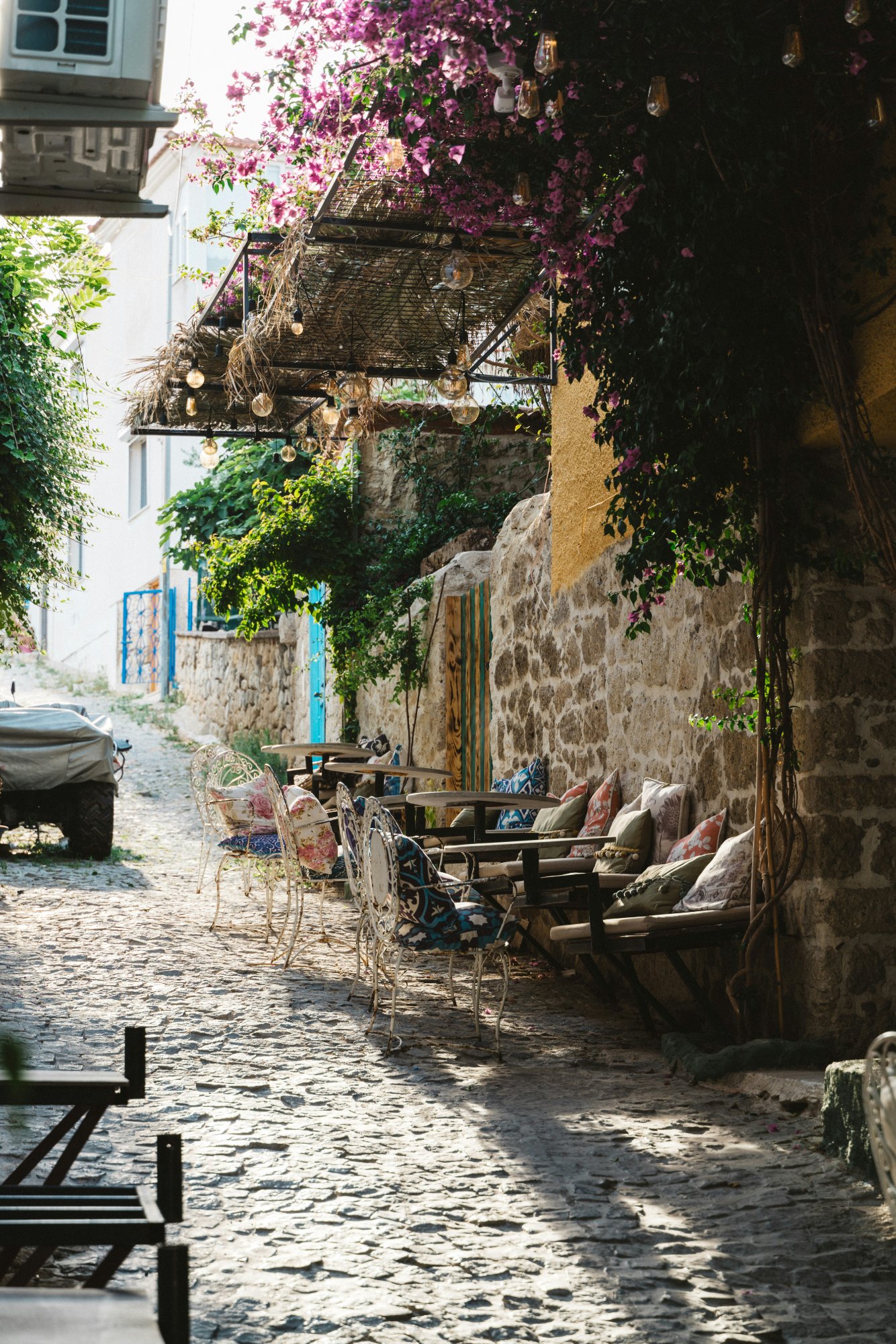
Alaçatı's centre is walkable in an hour, though it rewards a slower pace. The streets are paved with stone, shaded by bougainvillea, and lined with buildings painted in muted whites and blues. Many date to the 19th century, built by the Greek population that once dominated the Aegean coast.
The architecture is particular: thick stone walls, wooden shutters, interior courtyards hidden from the street. These buildings have been converted into hotels, restaurants, and residences, but the original structures remain intact. Renovation here follows strict guidelines — new construction must match the existing vocabulary.
The result is a town that feels coherent. There are no high-rises, no glass facades. The scale remains human.
Eating in Alaçatı
Dining here centres on the old quarter. Courtyards shaded by trees. Terraces overlooking the street. Restored stone houses where the kitchen changes with the season. The cooking draws on the Aegean — seafood, wild herbs, olive oil — though some kitchens pursue more refined approaches.
Breakfast culture matters. Hotels serve elaborate spreads — cheeses, olives, eggs prepared to order, fresh bread, honey from nearby hives. The morning meal extends into mid-morning, taken slowly on shaded terraces. It is part of the rhythm, not a prelude to rushing elsewhere.
The best tables are not always obvious. Some restaurants announce themselves; others occupy courtyards invisible from the street. Knowing which doors to enter is part of what distinguishes a considered visit from a casual one.
Dispatches from the peninsula
Notes on travel, food, and the Western Aegean. No agenda.
Thank you — first dispatch on its way.
The Bay and the Wind
South of town, Alaçatı Bay has become a centre for windsurfing and kitesurfing. The geography is particular: a shallow, sheltered bay where the meltemi wind arrives reliably from June through September. Schools operate along the shoreline, offering instruction for all levels.
The bay maintains a separate rhythm from the town. Days here begin early, revolve around wind conditions, and end at beach clubs that line the shore. It is active where the old quarter is contemplative — two versions of the same place, coexisting.
Timing a Visit
Alaçatı fills on summer weekends. Istanbul crowds arrive on Friday and depart on Sunday. For a quieter experience, visit midweek or in the shoulder seasons — May, early June, September, October. The town remains open; the streets empty enough to hear footsteps on stone.
Alaçatı is not undiscovered. But it has kept its character.