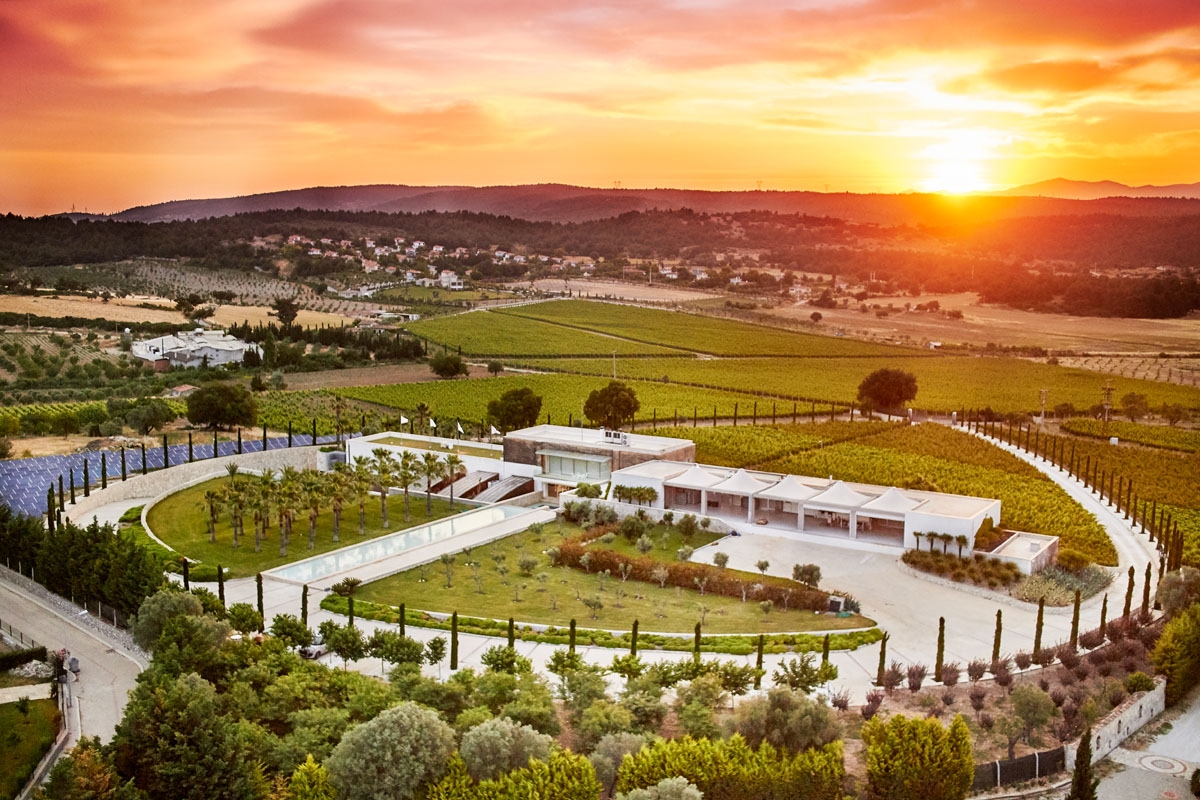
The most interesting meals in Urla rarely happen in the town centre. They take place on vineyard terraces reached by unmarked roads, in converted stone buildings set among olive groves, or at tables arranged beneath pergolas where the menu depends on what arrived that morning.
Urla has developed, over the past decade, into one of Turkey's most notable dining destinations. But it has done so without fanfare. There are no culinary festivals here. No promotional campaigns. The restaurants that have earned recognition — including Michelin stars — operate with a quietness that matches the region.
The Landscape of the Table
What defines Urla's gastronomy is proximity. Vineyards surround the town. The sea is fifteen minutes in any direction. Olive groves cover the hillsides. The ingredients arrive not from distant markets but from the immediate landscape.
This shapes what appears on the plate. Menus shift with the season. Fish is determined by the morning's catch. Vegetables come from kitchen gardens visible from the dining room. Wine is poured from producers whose cellars sit a short drive away.
The cooking here is not about innovation for its own sake. It is about expressing the land — clearly, without excess.
The Nature of These Places
The restaurants that define Urla share certain qualities. They tend to occupy converted buildings — stone barns, farmhouses, structures that predate their current use. They are often difficult to find, set back from main roads or hidden behind unmarked gates. Reservations, when required, are made by phone rather than app.
The settings matter as much as the food. A vineyard terrace at dusk. A courtyard shaded by old trees. A garden enclosed by high walls, invisible from the street. These are not restaurants designed for spectacle. They are places where the meal unfolds slowly, where conversation matters as much as the plate, where the bill arrives only when asked for.
Dispatches from the peninsula
Notes on travel, food, and the Western Aegean. No agenda.
Thank you — first dispatch on its way.
A Culture, Not a Scene
What has emerged in Urla is less a dining scene than a dining culture. Chefs know one another. Producers supply multiple kitchens. Guests return across seasons, watching menus evolve as ingredients shift.
There is no rush to expand. No pressure to multiply. The restaurants that define Urla's reputation remain small, personal, and difficult to book — not because of marketing, but because word has spread carefully, among those who understand what the peninsula offers.
The specifics — which tables, which kitchens, which evenings — reveal themselves to those who spend time here. Or to those who ask someone who has.
Urla's tables are not loud. But they are remembered.